
space planner
Space Planner
Space planner forms the backbone of successful interior design by organizing and structuring spaces to enhance functionality, comfort, and aesthetics. Before choosing colors, furniture, or finishes, designers develop a clear layout that defines how each area will function. An effective space plan makes the best use of available square footage and eliminates congestion, dead zones, and impractical arrangements.
Understanding User Needs and Lifestyle
The process begins with understanding how people will use the space. For residential interiors, designers consider family size, daily routines, storage needs, and lifestyle preferences. In commercial projects, they evaluate employee strength, workflow patterns, client interaction, and operational requirements. This user-focused approach helps create layouts that support comfort, productivity, and long-term usability.
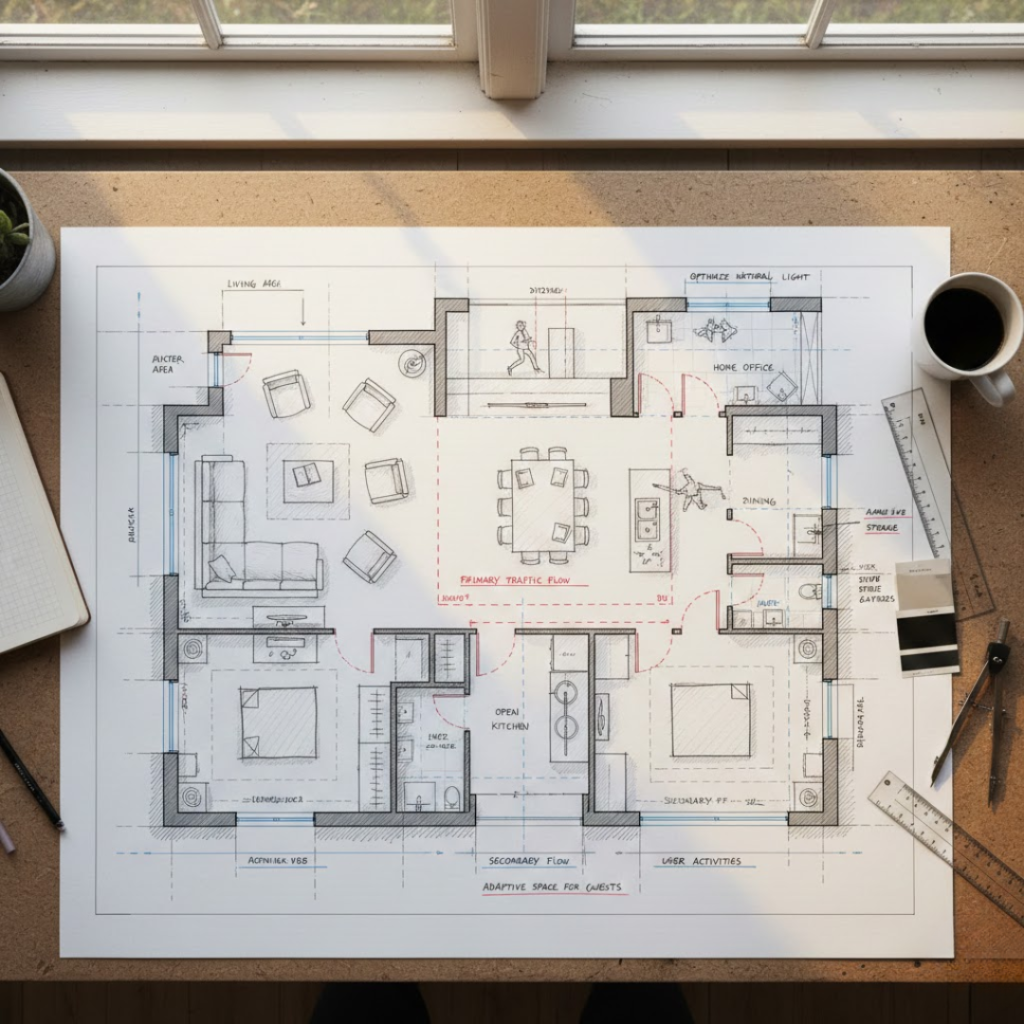
Functional Zoning of Spaces
Zoning organizes the interior by dividing it into areas based on specific functions. Homes typically include zones such as the living room, dining area, kitchen, bedrooms, workspaces, and utility areas. Offices, on the other hand, consist of reception areas, workstations, cabins, meeting rooms, breakout spaces, and storage. Through proper zoning, each activity receives a dedicated area while visual continuity and logical connections remain intact.
Circulation and Movement Flow
A well-planned layout ensures smooth and safe movement throughout the space. Clear pathways allow easy circulation between rooms without obstruction. Thoughtfully positioned doors, defined walkways, and adequate spacing between furniture help prevent congestion. Such planning improves accessibility, reduces the risk of accidents, and creates an open, comfortable feel even in compact interiors.
Furniture and Fixture Placement
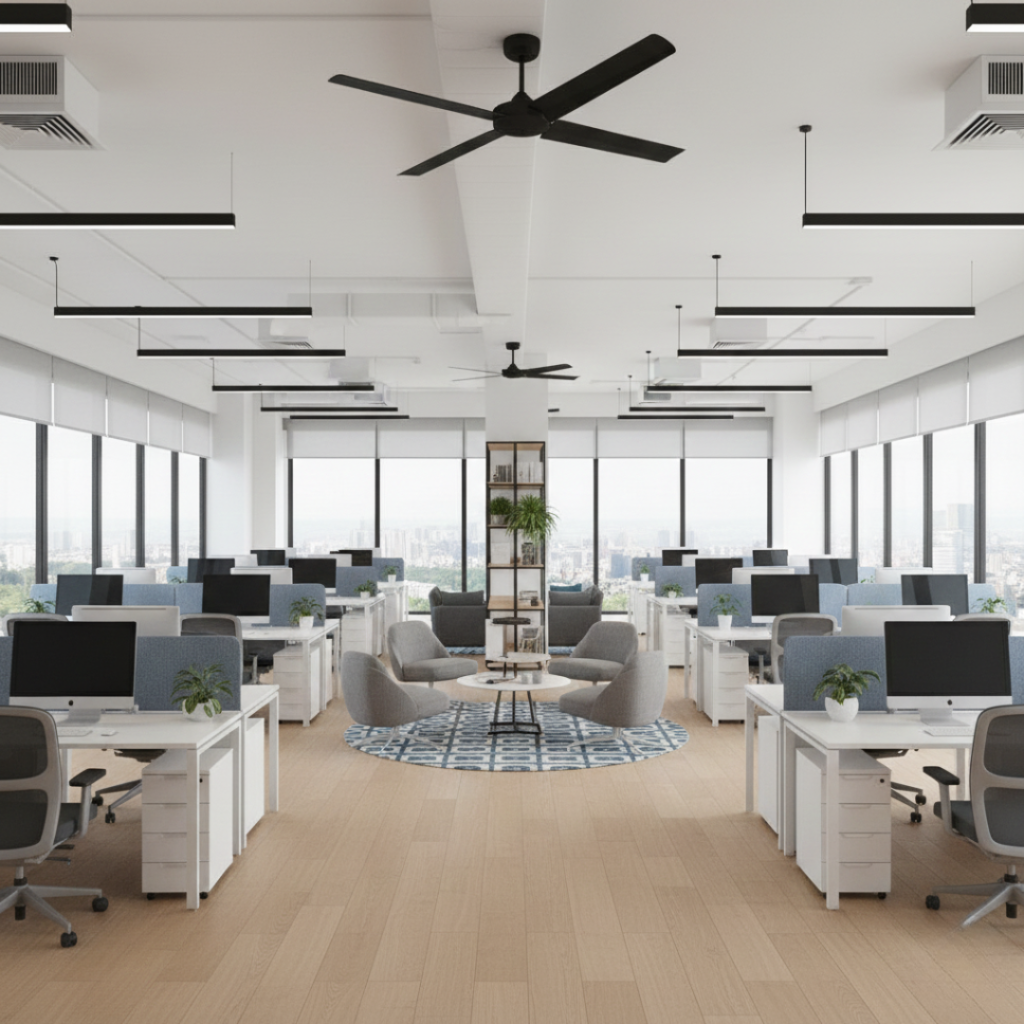
The way furniture is arranged strongly influences both function and perception. Designers consider scale, proportion, and ergonomics so that every piece fits harmoniously within the room. Adequate spacing between seating, tables, and storage units allows comfortable movement and efficient use. In commercial environments, carefully planned workstation layouts support collaboration, privacy, and overall efficiency.
Lighting and Ventilation Planning
Strategic placement of lighting and ventilation forms another key part of space planning. Designers position activity areas near windows to maximize natural light and layer artificial lighting to suit tasks, relaxation, and ambience. At the same time, they plan ventilation systems to ensure proper air circulation, thermal comfort, and a healthy indoor atmosphere.
Storage Optimization
Well-integrated storage solutions contribute significantly to an organized interior. Designers locate areas for built-in wardrobes, cabinets, shelves, and concealed units without disturbing the overall layout. By using both vertical and horizontal space effectively, these solutions maintain a clutter-free environment and enhance functionality.
Aesthetic Balance and Visual Harmony
Space planning also shapes the visual character of an interior. Through symmetry, alignment, and balanced proportions, designers create harmonious compositions. Careful coordination between open and enclosed areas, solid and void spaces, and furniture groupings results in a pleasing, well-structured environment.
Adaptability and Future Growth
Flexibility remains an essential aspect of a good space plan. Modular furniture, movable partitions, and adaptable layouts allow spaces to evolve as needs change. This forward-looking approach proves especially valuable for growing families and dynamic workplaces, where future expansion or reconfiguration often becomes necessary.